European Programmes
Erasmus+ placement in Brussels 2024–2025
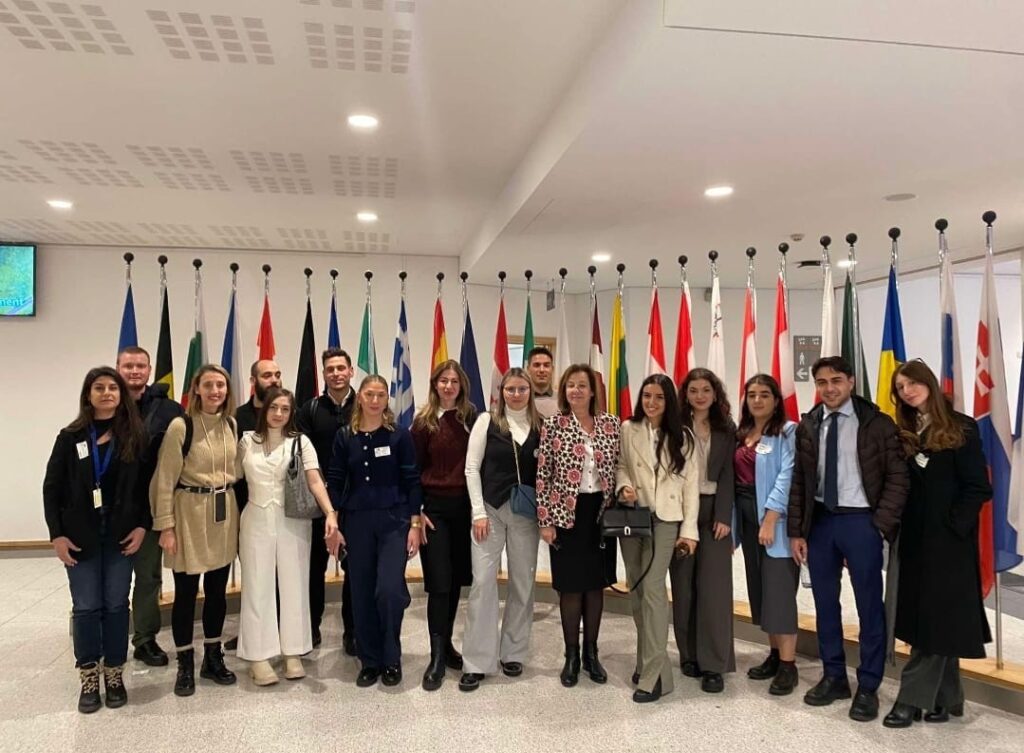
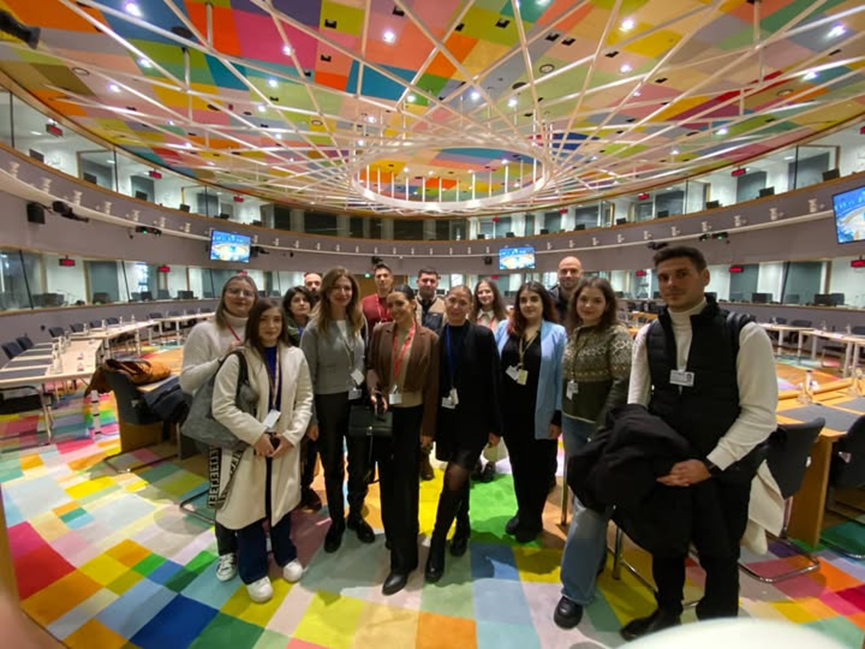
Students of the MSc in International and European Studies completed a short-term Erasmus+ placement in Brussels from 18 to 22 November 2024 at the Permanent Representation of Greece to the European Union, where they joined working groups of the Council of the European Union.
Some students, according to their academic and professional interests, undertook their internship at ReadLab Brussels, where they received training on European programmes and attended the conference “Bridging the Cybersecurity Skills Gap: The REWIRE Project’s Legacy and Future Pathways”.
In addition, all students had the opportunity to:
- visit the European Parliament and engage in discussions with Members of the European Parliament Sakis Arnaoutoglou and Giannis Maniatis;
- visit the House of European History and the Parliamentarium;
- attend a lecture by Mr Dimitris Fatouros from the UN Regional Information Centre entitled “The Progress of the 17 Sustainable Development Goals: Energy, Environment and Climate Change”;
- meet and speak with the Deputy Permanent Representative of Greece to the European Union, Ambassador Mr Efthymios Kostopoulos.
Educational Trip to Cyprus through Erasmus+
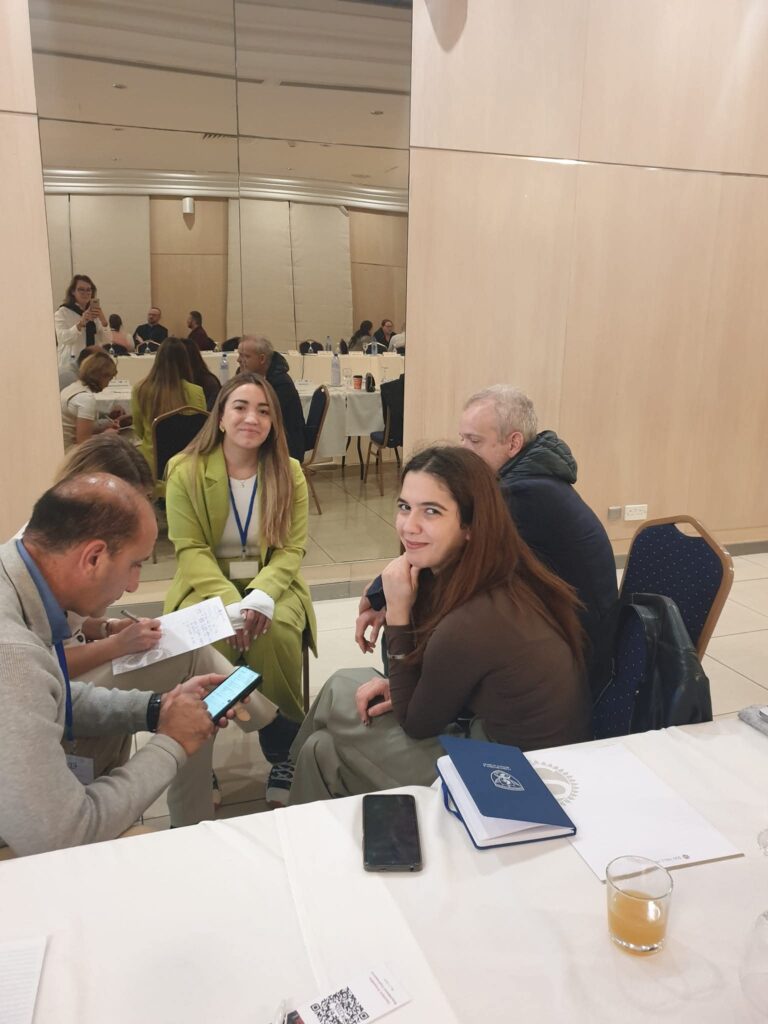
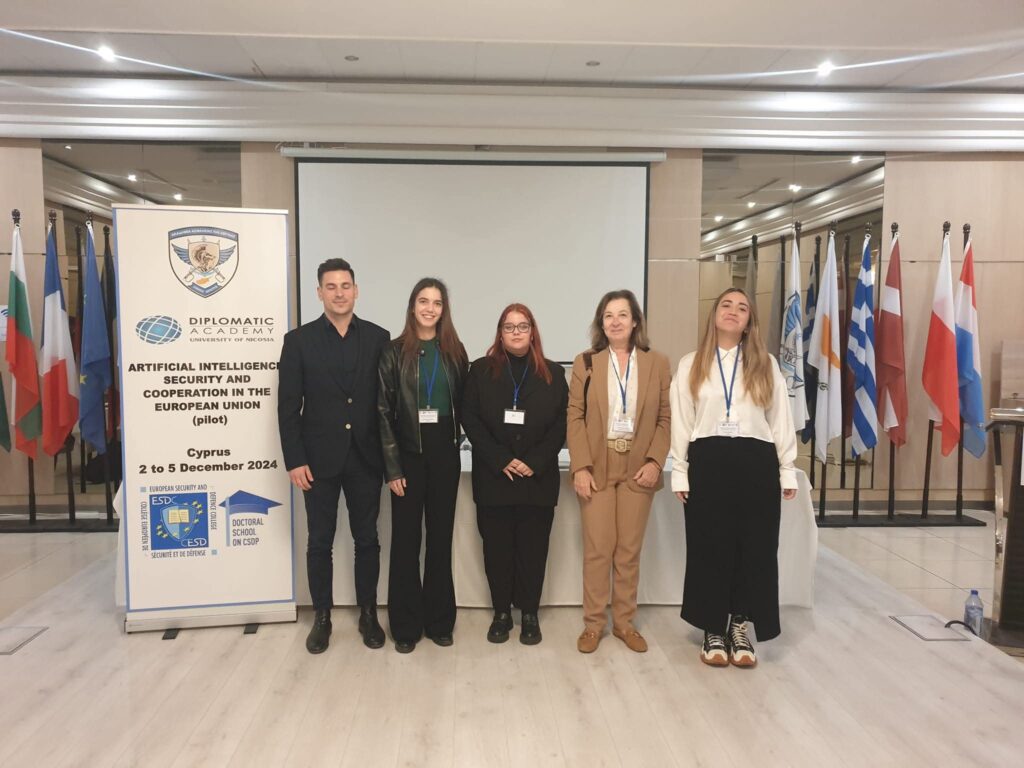
Students of the MSc in International and European Studies participated, through Erasmus+, in a specialised training course entitled “Artificial Intelligence, Security and Cooperation in the European Union”, held from 2 to 6 December 2024.
The course was organised by the Department of Political Science and Governance in cooperation with the Diplomatic Academy of the University of Nicosia, the Cyprus Security and Defence Academy (CSDA), and the Ministry of Defence of the Republic of Cyprus, under the auspices of the European Security and Defence College (ESDC).
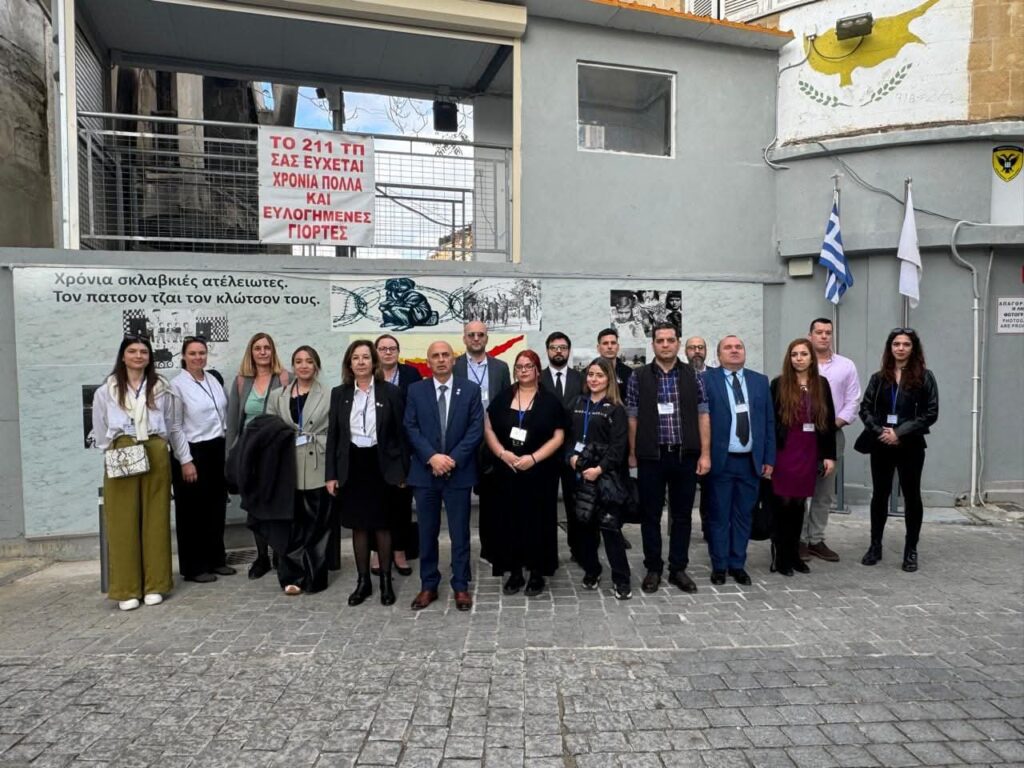
During their visit, the students also had the opportunity to visit the Green Line in Nicosia and the Tomb of Makedonitissa.
Erasmus+ Blended Intensive Programme on EU Secure: Aspects of European Security 2024–2025
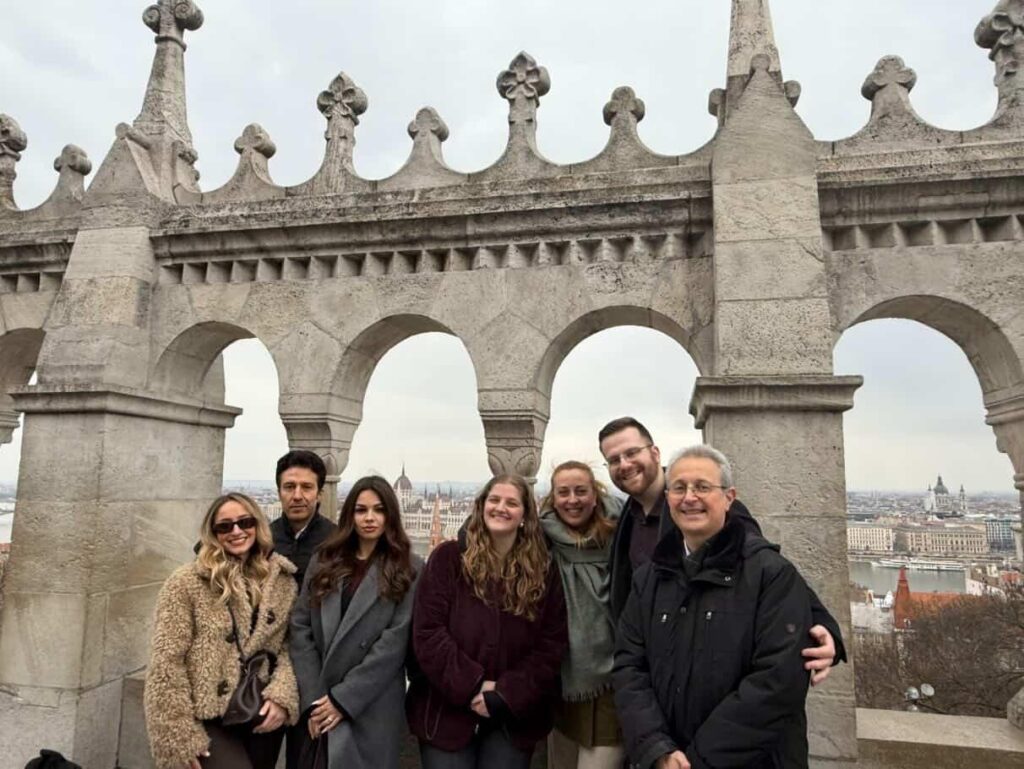
The Erasmus+ Blended Intensive Programme, titled “EU Secure: Aspects of European Security”, was organised by Ludovika University of Public Service in Budapest from 7 to 11 April 2025. The aim of the programme was to provide students with training on contemporary security challenges facing the European Union in an interactive and international learning environment.
Topics covered included:
- the role and influence of the European Union in a multipolar world,
- cybersecurity and risks associated with artificial intelligence,
- terrorism and hybrid threats,
- disinformation and fake news on social media,
- migration,
- climate and water security,
- sustainability and societal resilience,
- and issues related to humanitarian assistance and international cooperation.
The programme was delivered in two phases:
- Online phase: 31 March – 4 April 2025 via a MOOC platform and online lectures.
- On-site phase: 7–11 April 2025 in Budapest, featuring lectures, workshops, and EU decision-making simulations.
The programme also included cultural activities, such as visits to Buda Castle and the Hungarian Parliament Building, further enriching the students’ intercultural experience.


Research Methodology Course 2025
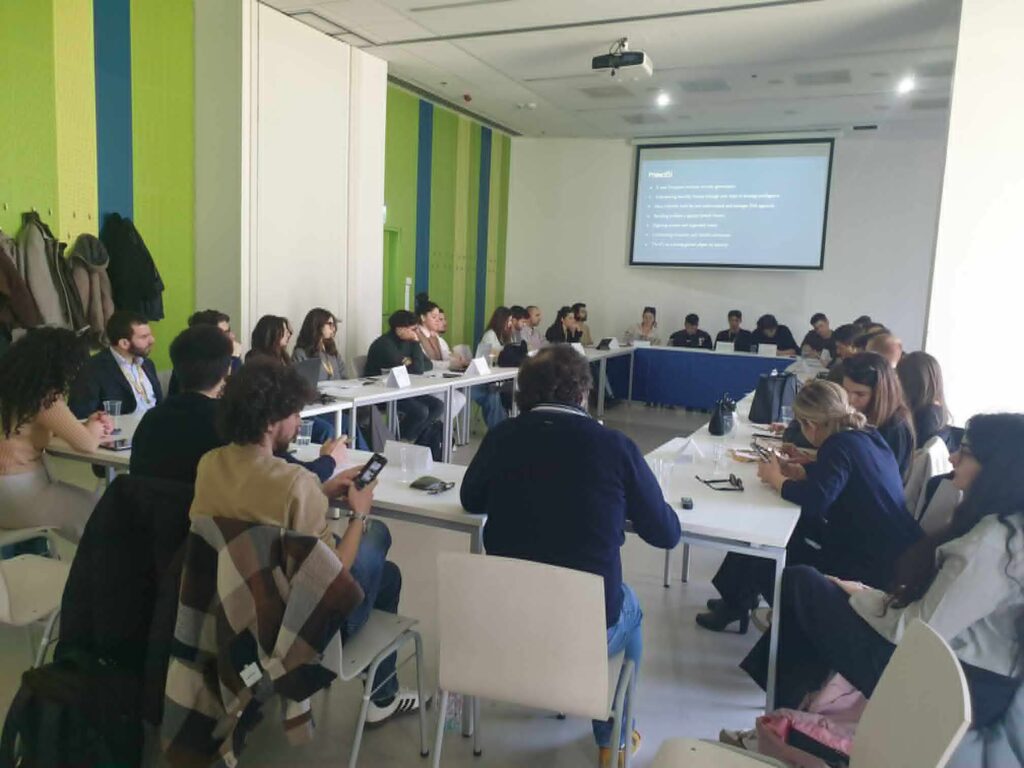
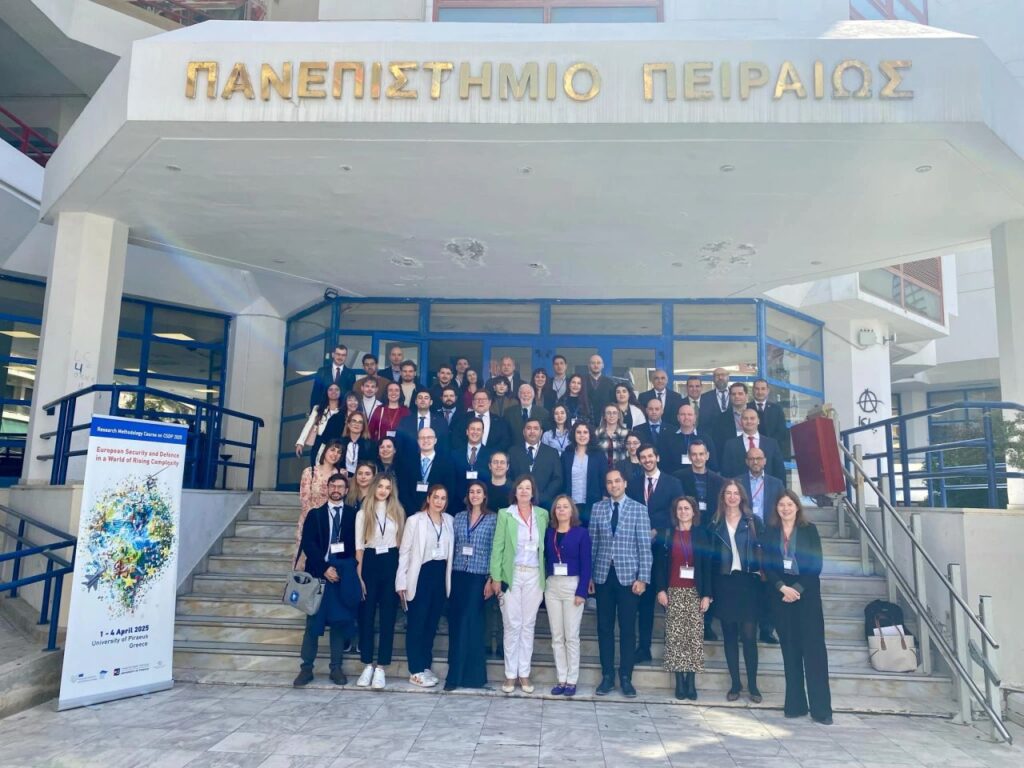
The annual Research Methodology Course of the Doctoral School of the European Security and Defence College, entitled “European Security and Defence in a World of Rising Complexity”, took place from 1 to 4 April 2025 at the University of Piraeus. The course was organised by Professor Foteini Asderaki, Director of the MSc in International and European Studies and Chair of the Doctoral School, Jean Monnet Chair at the Department of International and European Studies.
Postgraduate students of the MSc in International and European Studies had the opportunity to engage with academics, doctoral candidates, EU officials, diplomats, and representatives of European institutions and organisations on issues related to the unstable international environment, the role of the European Union, and strategic autonomy. They also benefited from specialised methodology seminars.
Speakers included Eva Gross from the European External Action Service, Dr Brice Didier from Sciences Po, Professor Anna Molnár from the University of Public Service Hungary, Professor Ilias Maglogiannis from the Department of Digital Systems at the University of Piraeus, George Verdi from the European Council on Foreign Relations, Associate Professor Panagiota Manoli, Dr Konstantinos Chatzisavvas, Senior Research Fellow at École des Ponts Business School, Kurt Engelen, Director of the Centre for Security and Defence Studies, and Dr Eleni Patouni, Project Officer GNC for Space at the European Defence Agency.
The round table discussion featured Professor Aristotelis Tziampiris, Chair of the Department of International and European Studies, Laurence Auer, Ambassador of France to Greece, and Professor Eirini Cheila from the University of Piraeus. Another round table included Wojciech Ponikiewski, Chargé d’Affaires a. i. of the Republic of Poland, Anastasios Rozolis, Chairman of the BoD of the Hellenic Manufacturers of Defense and Security Material Association (SEKPY), and Dr Alvaro Renedo Zalba, Ambassador of Spain in Qatar, ESDC Doctoral School Alumni.
The methodology seminars were delivered by Professor Marinel-Adi Mustață, Director of the Interdisciplinary Doctoral School at Carol I National Defence University; Professor Petros Maravelakis from the University of Piraeus; Professor Claudio Longobardi from the Department of Psychology at the University of Turin; Assistant Professor Sofia Mastrokoukou from the University of Salerno; Associate Professor Athanasios Samaras; Professor Ioannis Paravantis, both from the Department of International and European Studies; and Bernard Siman, Senior Associate Fellow at the Egmont Institute. Dr Christina Kontogoulidou, Head of the Office of International Relations and European Programmes at the University of Piraeus, also informed students about mobility opportunities.
Erasmus+ placement in Brussels 2025–2026
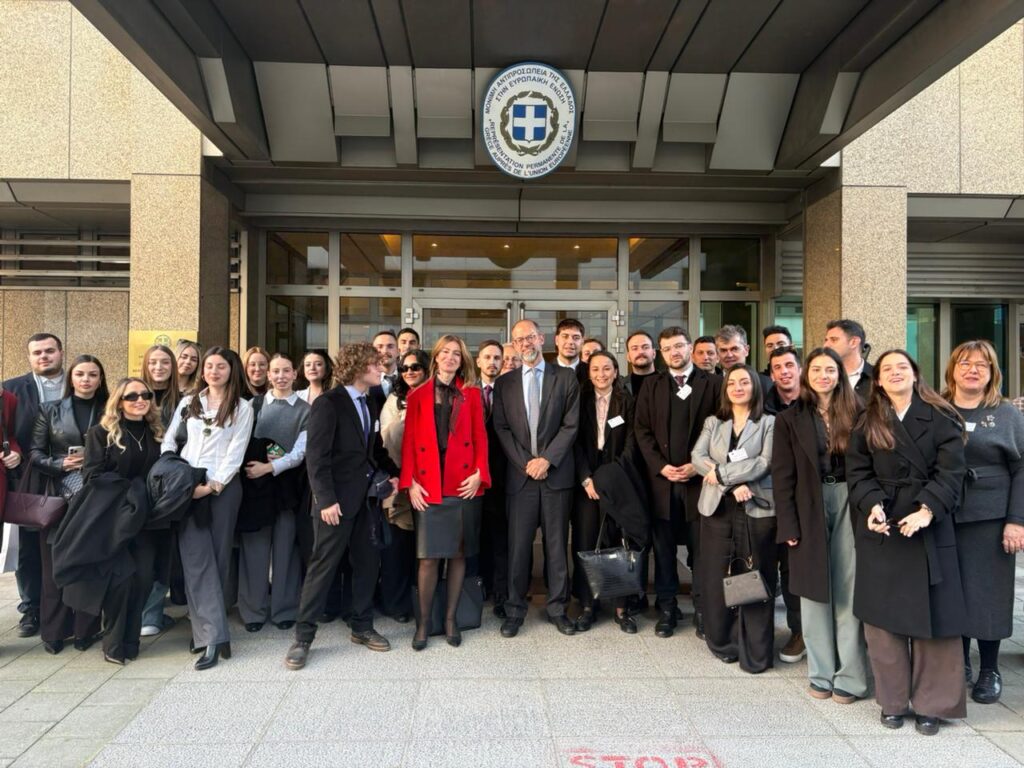
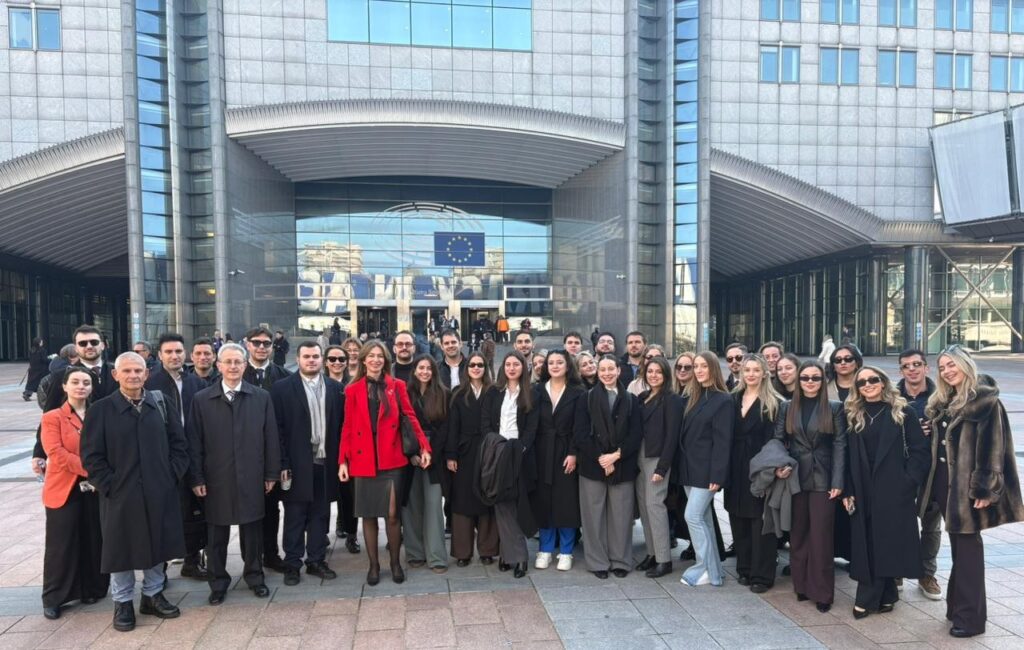
Students of the MSc in International and European Studies completed a short-term Erasmus+ placement in Brussels from 2 to 6 March 2026. Through a varied programme of activities and meetings, participants gained valuable academic and professional experience, while developing a deeper understanding of the functioning of the European Union.
The programme included:
- A visit to the House of European History.
- Visits to European institutions, including the European Parliament, the Council of the European Union, and the European Commission.
- A meeting at the European Parliament with Nikos Farantouris, Member of the European Parliament and Professor of European Law at the Department of International and European Studies.
- A meeting with Ioannis Vrailas, Ambassador and Permanent Representative of Greece to the European Union.
- Participation in the Job Shadowing programme “A Translator’s Daily Work” at the Directorate-General for Translation.
Blended Mobility Programme: “EU Secure: Aspects of European Security” 2025–2026
The Erasmus+ Blended Intensive Programme (BIP) entitled “EU Security: Aspects of European Security” was organised by Ludovika University of Public Service in Budapest from 16 to 20 March 2026. The aim of the programme was to provide students with training on contemporary security challenges facing the European Union through an interactive and international learning environment.
Participants gained knowledge and insights into:
- European security,
- terrorism and counterterrorism,
- cybersecurity and hybrid threats,
- cross-border health crises,
- the role of NATO and the European Union,
- and the impact of the war in Ukraine on European security.
The programme was delivered in two phases:
- Online phase: 9–13 March 2026 via a MOOC platform and online lectures.
- On-site phase: 16–20 March 2026 in Budapest, featuring lectures, workshops, and EU decision-making simulations.
The programme also included cultural activities, such as visits to Buda Castle and the Hungarian Parliament Building, further enriching the students’ intercultural experience.

Educational Visit to New York
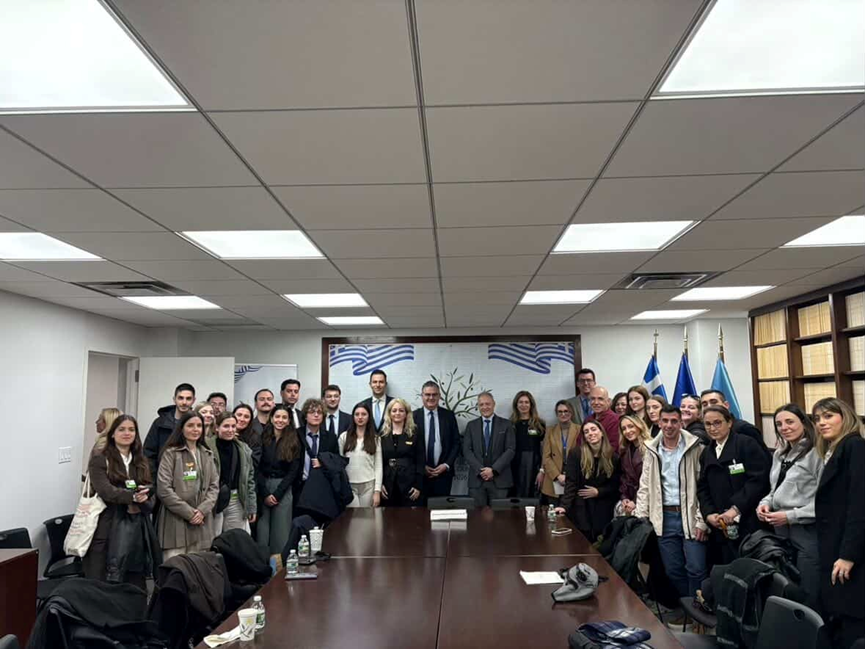
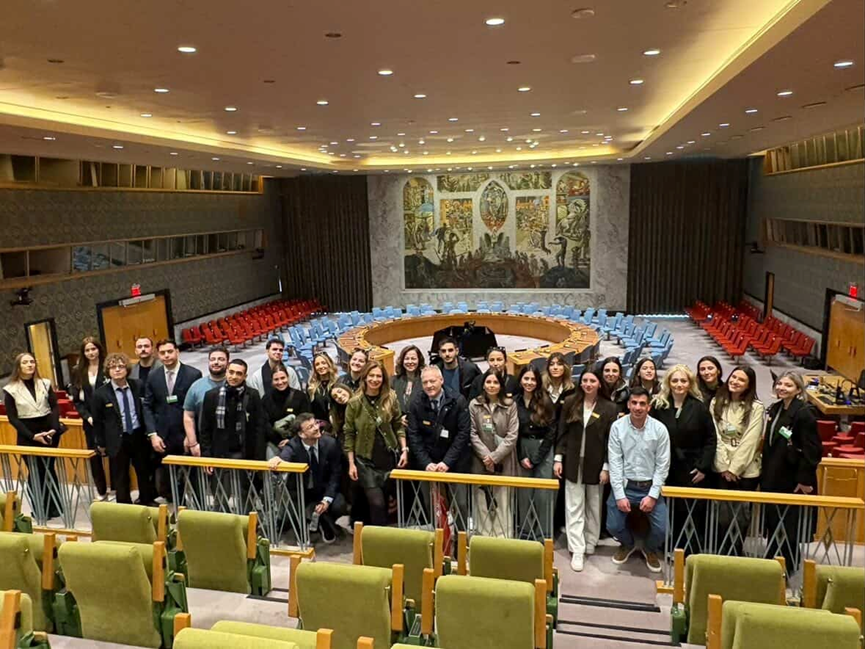
Students of the MSc in International and European Studies visited New York from 20 to 26 April 2026.
During the visit, participants had the opportunity to engage with experts in their respective fields of research and to visit key institutions, including:
- The Consulate General of Greece in New York.
- The United Nations Headquarters and the Permanent Mission of Greece to the United Nations.
- New York University (NYU).
- The Greek National Tourism Organisation (GNTO).
Research Methodology Course 2026
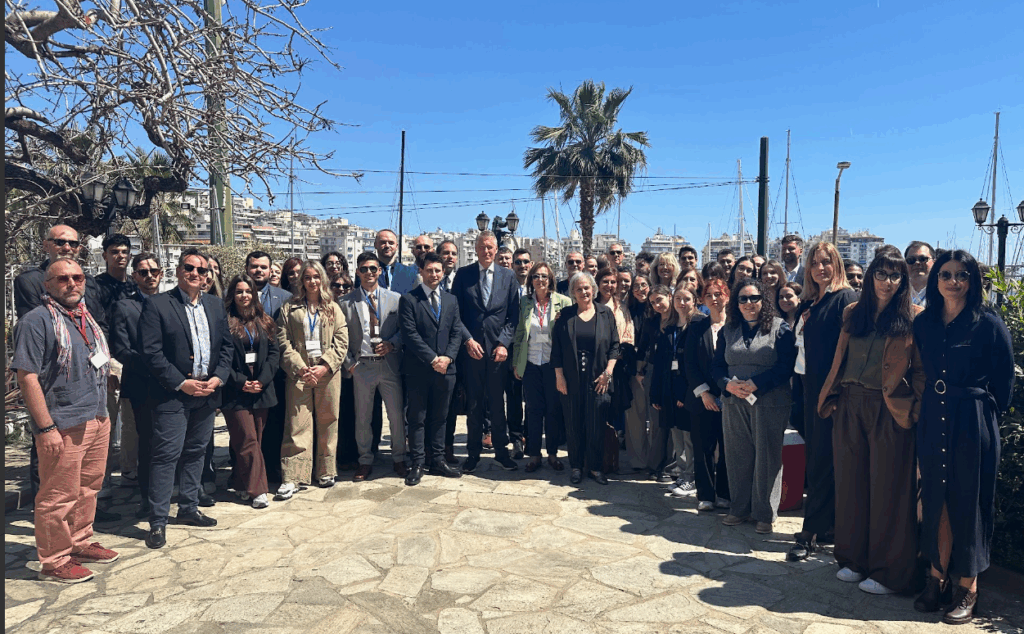
The Research Methodology Course of the European Security and Defence College Doctoral School, entitled “The Common Security and Defence Policy: Adaptation amid Rising Geopolitical Tensions and a Transforming Transatlantic Relationship,” was held from 21 to 24 April 2026 at the University of Piraeus. The course was organised by Professor Foteini Asderaki, Director of the MSc in International and European Studies and Chair of the Doctoral School, Jean Monnet Chair at the Department of International and European Studies.
This year’s programme provided an outstanding learning experience for postgraduate students of the MSc in International and European Studies, as well as for 25 doctoral candidates from various European universities, with contributions from distinguished speakers, diplomats, senior EU officials, and renowned academics.
A particular honour was the participation of Ciara O’Floinn, Ambassador of Ireland; Stavros Avgoustides, Ambassador of Cyprus; and Michail Spinellis, Ambassador and Director General for Defence Policy and International Relations at the Hellenic Ministry of National Defence, who shared valuable insights into the priorities of successive EU Presidencies.
Students also had the opportunity to explore transatlantic relations through lectures delivered by leading experts and academics, including Marcus Houben (European Commission Secretariat-General); Anna Molnár (Ludovika University of Public Service); Aristotelis Tziampiris (University of Piraeus); Antonio Missiroli (SAIS Europe/Sciences Po); Paul James Cardwell (King’s College London); Nikolaos Lampas and Andrew Cooper (American College of Greece); Ralf Roloff (George C. Marshall Center); Dr Alexandra Nikopoulou; Nikolaos Raptopoulos (University of Piraeus); Fadi Georges Comair (The Cyprus Institute); and Elie Perot (Vrije Universiteit Brussel).
Regarding Research Methodology in International and European Studies, Angustias Hombrado (National University of Distance Education, Madrid) presented methods of qualitative comparative analysis; Petros Maravelakis (University of Piraeus) delivered sessions on quantitative methods; Sofia Mastrokoukou (Universitas Mercatorum) presented artificial intelligence tools for research; while Abel Polese (Dublin City University) discussed publication strategies. Theofanis Exadaktylos (University of Surrey) delivered a workshop entitled “Europeanisation and its Application in CFSP/CSDP.”
COST Action CA22121, “Rising Nationalisms, Shifting Geopolitics and the Future of European Higher Education/Research Openness (OPEN)”
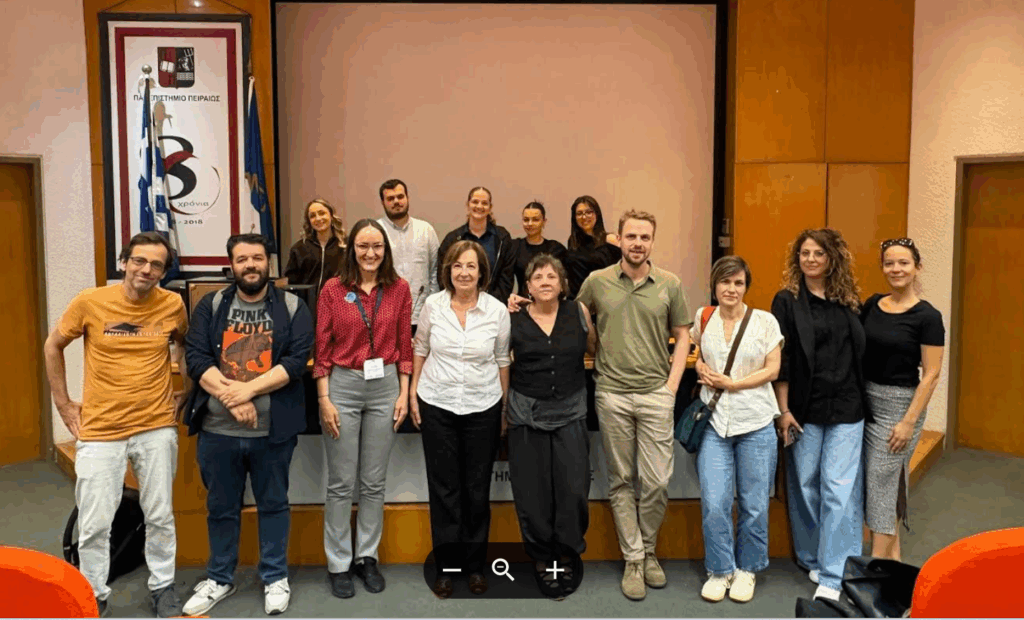
Within the framework of COST Action CA22121 OPEN, entitled “Rising Nationalisms, Shifting Geopolitics and the Future of European Higher Education/Research Openness (OPEN),” coordinated by Professor Katja Brøgger of Aarhus University, Professor Foteini Asderaki, Director of the MSc in International and European Studies and member of the programme’s Management Committee, hosted the meetings of Working Group 1 at the University of Piraeus.
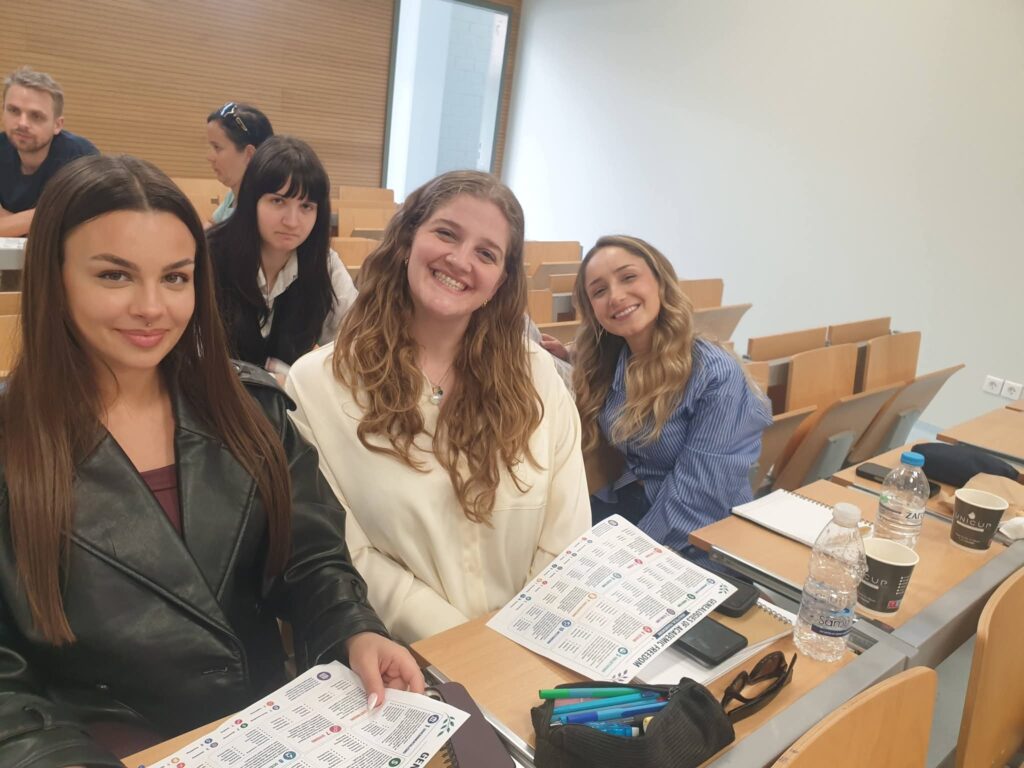
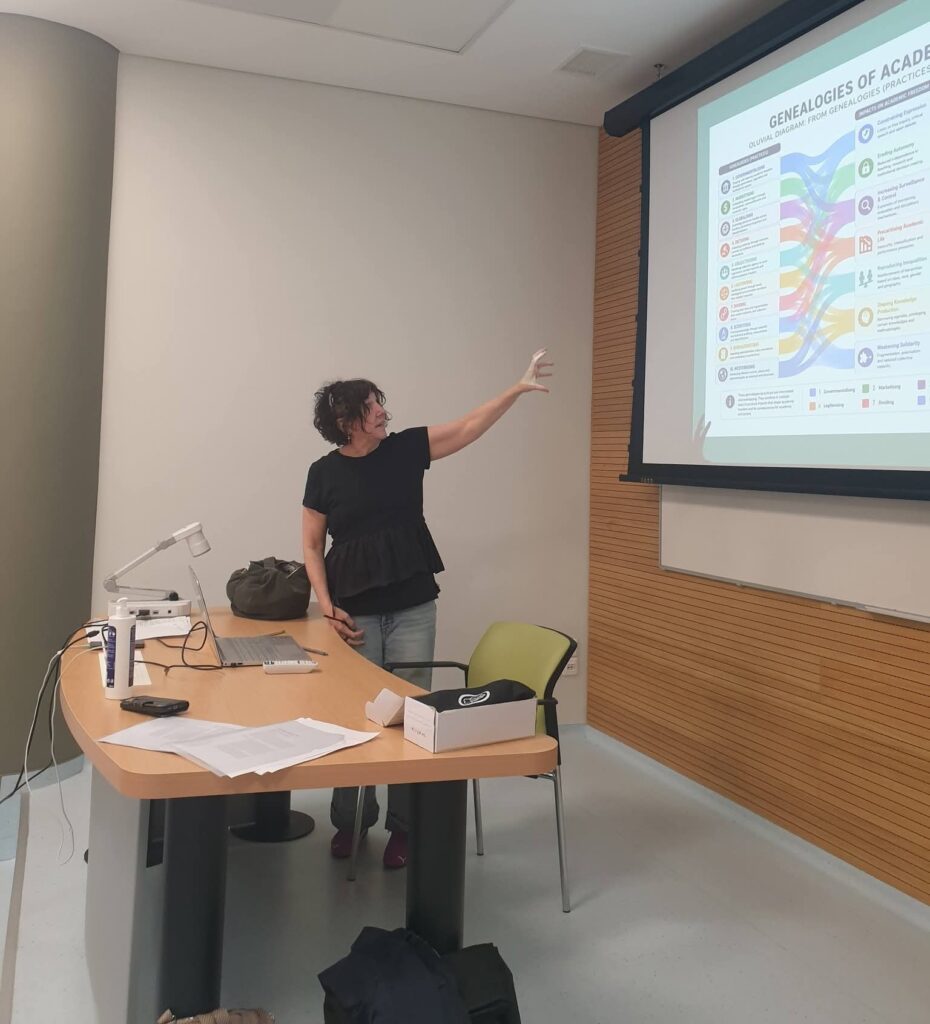
The Working Group, entitled “Research Genealogy: Bringing Together Higher Education and Political Science Studies,” met on 7–8 May 2026 under the coordination of Professor Jo-Anne Dillabough from the University of Cambridge and Dr Hans Schildermans from the University of Vienna. The meeting brought together academics and researchers from various European universities for a productive dialogue on the contemporary challenges facing higher education in Europe.
East-Med Jean Monnet Centre of Excellence 2.0 (EXCELEM 2.0)
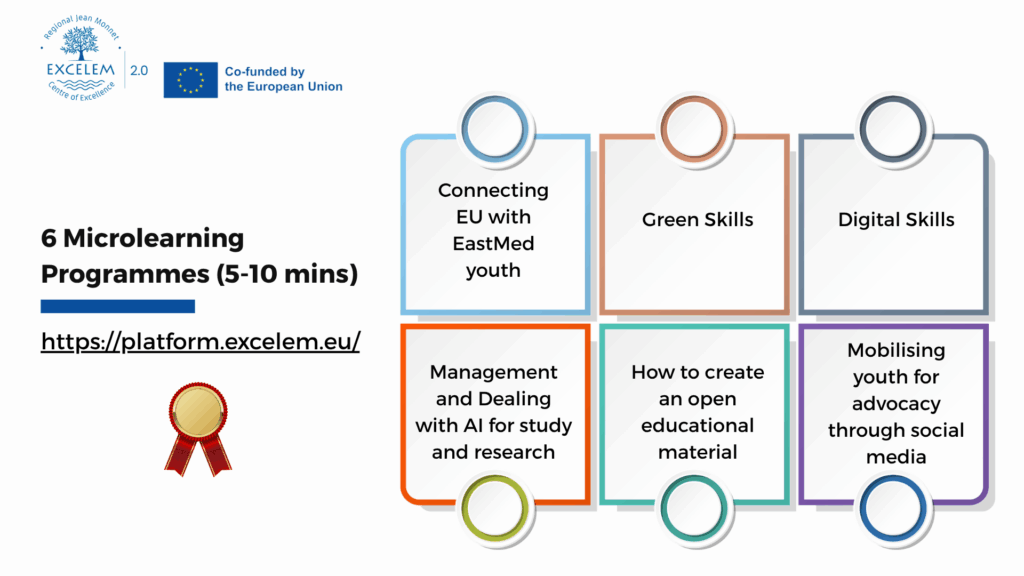
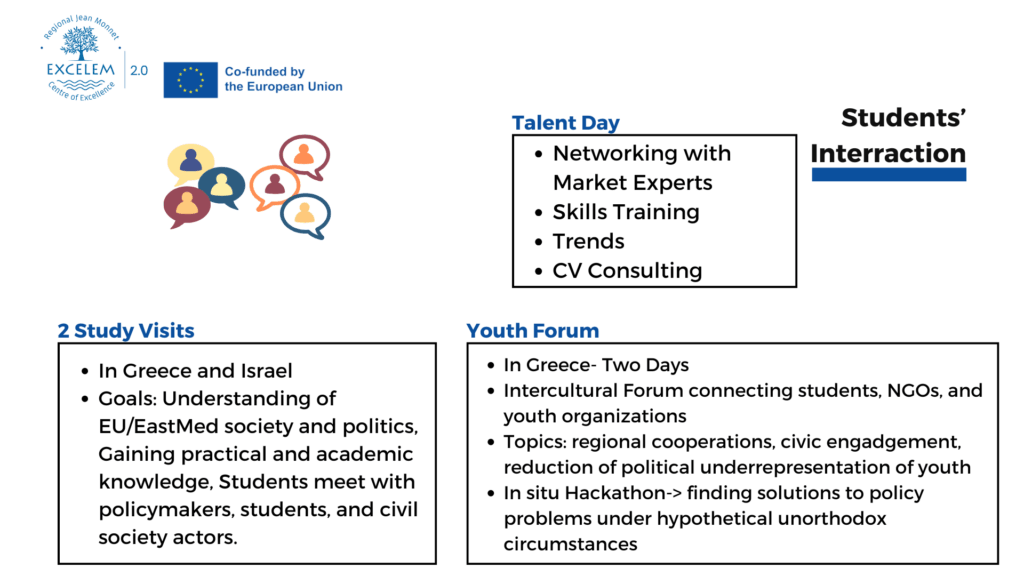
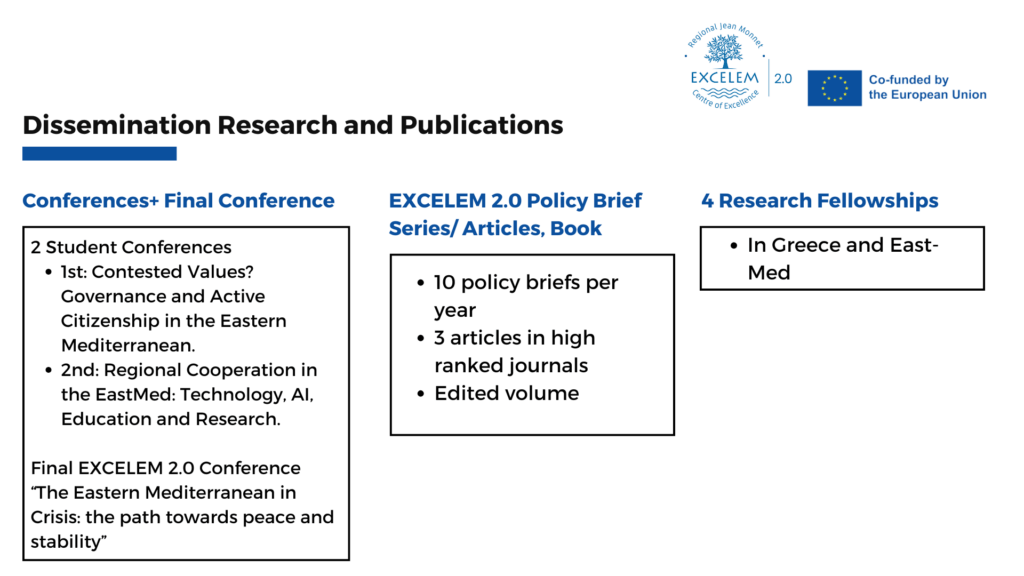
The East-Med Jean Monnet Centre of Excellence 2.0 (EXCELEM 2.0) is a project dedicated to creating a dynamic research hub focused on the European Union and the Eastern Mediterranean region. Its main objective is to strengthen cooperation among universities, students, researchers, youth organisations, and policy-makers, while promoting dialogue, innovation, and the active participation of young people.
EXCELEM 2.0 addresses major contemporary issues, including:
- EU foreign policy and regional cooperation,
- security in the Eastern Mediterranean (energy, water, cybersecurity, and migration),
- green diplomacy and sustainable investment,
- artificial intelligence and disinformation,
- youth and women’s empowerment,
- social inclusion and the reduction of inequalities.
Postgraduate students of the MSc in International and European Studies have the opportunity to participate actively in the Centre’s activities and initiatives.
More information is available on the official website:
https://excelem.eu/